
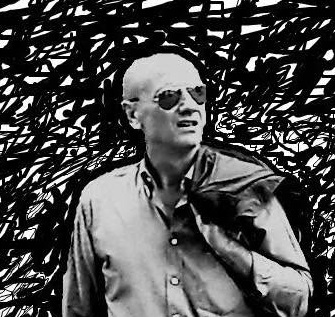
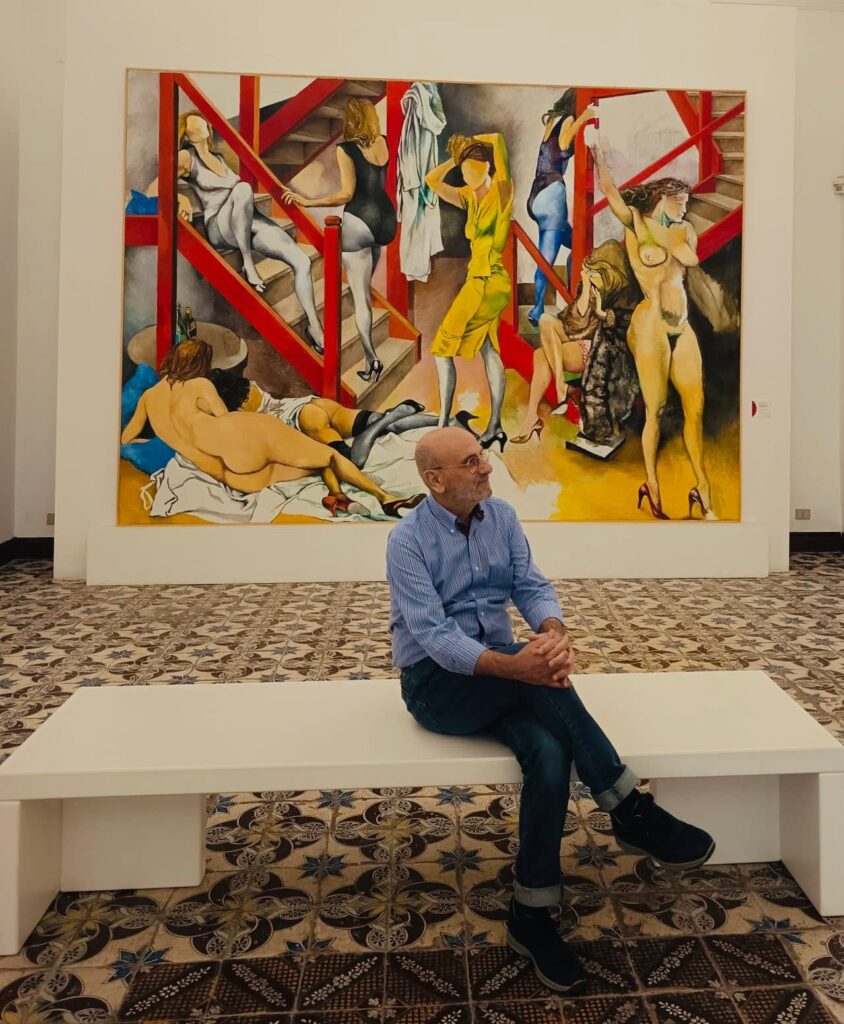
Thiruvananthapuram: Italian artist Giacomo Cuttone, from Sicily, offers a distinctive artistic perspective on Kerala’s Onam in the August 2026 edition of Litterateur Malayalam Edition, under the title “Giacomo Cuttone: Kerala Painted with Flowers.”
The feature presents Onam through the eyes of an internationally acclaimed artist from outside Kerala. For Cuttone, Onam is not limited to the traditional flower carpets, festive feast or boat races. Instead, he approaches the festival as a world of colours, forms and memories.
Through an artist’s perspective, Onam emerges not merely as a festival, but as a story told through colours, a memory that blossoms through flowers, and a visual expression of the relationship between human beings, nature and society.
The feature also offers readers an opportunity to look at a familiar Kerala festival from the perspective of someone who comes from a different cultural landscape. This outside gaze creates a fresh visual and artistic interpretation of Onam and invites readers to rediscover the festival beyond its familiar symbols.
The August 2026 edition of Litterateur Malayalam Edition brings together such cross-cultural artistic and literary perspectives, connecting Kerala’s cultural experiences with creative voices from different parts of the world.
Onam Through the Eyes of an Italian Artist
By Giacomo Cuttone, Sicily, Italy
When the monsoon rains slowly withdraw, Kerala takes on a new colour. Amid the greenery come the joy of the harvest and the colours of flowers. It is at this time that Onam, Kerala’s most beloved festival, arrives.
Onam is a celebration of prosperity, happiness and gratitude. It is also connected to an ancient story of Kerala—the story of King Mahabali.
Mahabali, who is believed to have once ruled Kerala, was known as a just ruler who loved his people. According to Kerala’s traditional belief, everyone lived in happiness and peace during his reign. It is said that Mahabali returns to earth once a year to see his beloved people.
It is to welcome him that Kerala celebrates Onam with such affection. Flower carpets, known as pookkalams, appear in the courtyards of homes. The aroma of the Onam feast fills the houses. Boat races, folk songs and traditional games add colour and excitement to the celebrations.
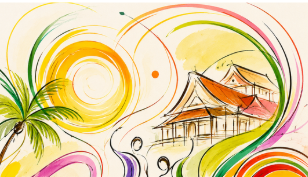
But when viewed through the eyes of an artist, Onam is more than a festival. It is Kerala painted in colours—a Kerala that lives in flowers, greenery, water, earth and the smiles of its people.
Today, Onam is a festival celebrated by everyone in Kerala. Beyond differences of religion and caste, it has become part of Kerala’s shared identity. These are days when families and communities come together to celebrate old memories, the beauty of nature and their love for their homeland.
For ten days, from August to September, Kerala becomes a land of celebration. In cities and villages, homes and streets are filled with the colours of Onam. Flower carpets, the Onam feast, dances, songs, boat races and various traditional practices come together to present Kerala’s distinctive culture in a beautiful way.
The greatest celebration of these ten days takes place on Thiruvonam, the most important day of Onam. On that day, it seems as if the whole of Kerala celebrates its happiness together.
For me, as an artist, Onam is not simply a festival. It is a beautiful sight in which an entire land celebrates its colours, memories and happiness together.
Music, theatre and dance fill the Onam season with sound and movement. But from an artist’s point of view, the deepest visual spirit of Onam can be found in the visual arts.
During these days, homes, courtyards and sometimes even temples become like canvases. Colours, forms and symbols passed down through generations appear there with new meanings.
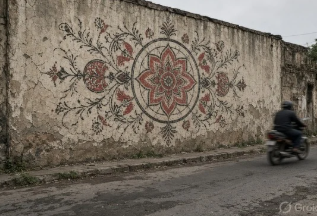
At the heart of this tradition is the pookkalam. It is a beautiful decoration made with flowers to welcome Mahabali. As each day of Onam passes, the pookkalam becomes larger and more elaborate. Circles, geometric shapes, beautiful patterns and flowers of many colours come together to create a living picture in the courtyard. It reminds us of nature’s abundance and the fertility of the earth.
But the pookkalam is more than a decoration. It is an experience of togetherness. Family members sit together to collect flowers and create the pookkalam. In many places, neighbours and friends also join them.
The simplicity of flowers thus becomes a symbol of happiness, prosperity and friendship.
Perhaps the most beautiful thing about a pookkalam is that, after a few days, it disappears. It therefore becomes a fleeting work of art that survives only in memory.
Kerala’s visual tradition also has an important place for mural painting. Found in temples, palaces and old buildings, these paintings form an important part of Kerala’s artistic history. Created using natural colours and delicate lines, they depict mythological stories, divine figures, nature and human life.
During Onam, when Kerala’s old stories and new celebrations come together, these murals remind us of the depth of this artistic tradition.
Another aspect that fascinates an artist like me is that this tradition does not remain static. Contemporary artists are presenting the old forms, colours and symbols of Onam in new ways. In painting, design and crafts, new works are being created by drawing inspiration from pookkalams, murals and various symbols associated with Onam.
In this way, tradition is not simply repeated. It enters the artistic language of a new generation.
From an artist’s point of view, therefore, Onam is not merely a festival. It is a story told through colours. It is a memory that blossoms through flowers. It is also a beautiful picture of the relationship between human beings, nature and society.
In every petal of a flower, every line of a painting and every form in a decoration, a small story of Kerala is hidden.
Every year, when Onam arrives, Kerala paints those stories once again in colours—a new picture of its land, nature, people and memories.
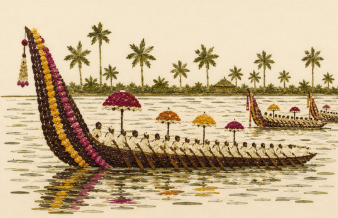
Why this article makes the August 2026 issue of Litterateur Malayalam Edition distinctive
What makes this article particularly special is the voice behind it. An Italian artist from Sicily, looking at Onam from outside Kerala, is interpreting one of Kerala’s most familiar cultural celebrations through the language of visual art.
At a time when Onam features in countless Malayalam publications, Litterateur offers something different: it allows Kerala to be seen through the eyes of an international artist. Instead of merely describing Onam’s customs and celebrations, Cuttone explores the festival through colour, form, flowers, murals, memory, nature and community.
This gives the August 2026 Malayalam Edition a distinctive cross-cultural dimension. It is not simply an article about Onam; it is an encounter between Kerala’s cultural memory and an Italian artist’s imagination.
That perspective makes the Litterateur Onam issue different from conventional festival editions—and reflects the magazine’s larger literary vision of bringing Kerala into dialogue with the wider world.